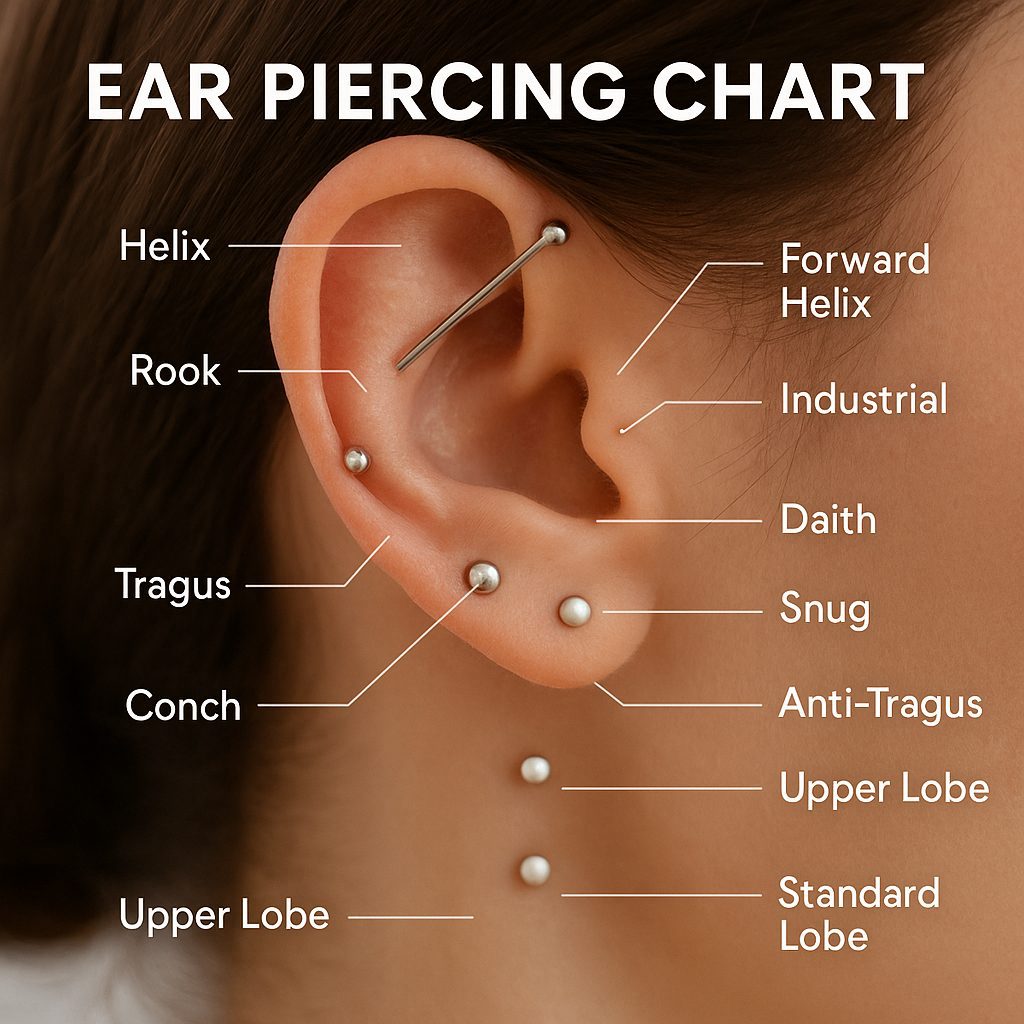
Ear Piercing Chart – Your Ultimate Guide to Ear Piercing Styles
Considering getting a new ear piercing? An ear piercing chart can help whether you are a beginner or a veteran looking to expand your collection. An ear piercing chart is more than a diagram. It serves as a roadmap for planning, styling, and achieving the perfect ear arrangement.
What is an Ear Piercing Chart?
A Brief Summary
An ear piercing chart is a diagram depicting the ear and its potential places of piercing. It includes the lobe and even the more edgy inner cartilage. An ear piercing chart has all the information literally at a glance.
Why You Need It Before Getting Pierced
Walking into a piercing studio without a plan can result in missed opportunities, such as getting a piercing that perfectly matches your style. Planning your piercings with the available chart make s the choices stylish and helps your ear look balanced and proportionate without giving the feeling that it was randomly decorated.
A Brief Description of the Ear Anatomy
Dividing Ear Regions
Outer Ear (Auricle)
This includes the helix, anti-helix and other visible pieces of cartilage situated at the perimeter of the ear.
Inner Ear Cartilage
These are the deeper and thicker regions such as the conch and the rook, which, as mentioned, requires artistry.
Earlobe – The Classic Spot
Soft, fleshy, and painless. The first spot for many but definitely not the final destination.
Types of Ear Piercings on the Chart
Let’s go through each piercing location:
Standard Lobe Piercing
The original piercing. Heals rapidly and pain level is minimal. Almost any jewelry can be worn on this piercing.
Upper Lobe Piercing
Similar to the upper lobe, this is further up the ear and allows for a more stacked appearance.
Helix and Forward Helix
Positioned on the upper rim of the ear. Fantastic for small hoops or stud earrings.
Tragus and Anti-Tragus
The tragus is the small flap that covers the ear. Anti-tragus is just opposite to it. These are major cool-girl aesthetic.
Conch Piercing
Right at the center of the ear cartilage. Looks stunning with an earring that is a large hoop and sits against the ear.
Daith Piercing
That tucked away piercing on the curve of the inner ear. There are those who advocate it helps with migraines.
Rook Piercing
That sits above the daith. One of a kind and somewhat concealed, this piercing is a conversation starter from a close distance.
Industrial Piercing
Edgier, bolder, and more eye catching. This consists of two holes that are connected with a barbell across the upper ear.
Orbital Piercing
Two punctures adorned by one ring that are most commonly located on the lobe and helix.
Snug Piercing
Horizontal puncture on the anti-helix. It is charmingly quirky and is on the rarer side.
Pain Levels and Healing Times for Each Piercing
What Hurts More?
Painless – lobe. Moderate – cartilage. Bravery required – industrial and rook.
Quick vs. Slow Healers
Lobe: 6-8 weeks Helix/Cartilage: 3-6 months Conch/Rook: Up to 12 months
Timeframes invariably shift, so maintaining a degree of patience is essential!
Choosing the Right Piercing Based on Your Style
Minimalist? Go for Lobe or Helix
A lobe or single helix will look graceful especially when accessorized with a minimal stud.
Edgy Vibes? Try Industrial or Rook
If attention is what you’re after, turn heads with a bold rook or industrial bar. They’re unapologetically fierce.
How to Use an Ear Piercing Chart
Planning a Piercing Journey
The chart allows you to plot your future piercings as a step-by-step journey or all at once, as an ear party, helping you stay structured.
Symmetry and Aesthetics
Some people enjoy symmetrical ears, while others like the asyimteric statement. The chart allows you to plan for both.
Tips for First Timers
What to Anticipate at The Studio
Not at all. Getting a tattoo doesn’t involve a shopping center piercing parlors. A properly equipped tattoo studio will pierce using needles only, will offer a thorough after-care guide, and will use only clean, professional-grade equipment.
Aftercare Instructions – The Important Points
Avoid touching and saline soaks, and don’t sleep on the area – your new piercing, which needs a lot of care, will be a hassle but rewarding.
Infection, Keloids, And Others – Risks And Safety Issues
Safety Concerns With Keloids And Infection
Be observant. With careless hygiene and exposure to dirt, using low-grade jewel will harm care-free piercings.
Only Trained Professionals
Comment on cleanliness protocols and use of the right equipment. Supporting literature and reviews are important.
Every Piercing’s Jewelry Stacks
“Conch Hopes Hoops and Tragus Requires Mini Flat-Backs”
All earrings don’t suit all piercings. The placement determines what goes best.
Aimed at Allergy Sufferers – Steel, Gold, Titanium
Avoid rubbing supper, and irritation for allergic skin with gold, silver, and steel. The latter two are/are not recommended.
Piercing Sets You Can Style And Stack
A Composite Ear
Use various styles and sizes, metals, which allows flexibility to design your very own image.
Step Into Style
Use two or one, and educator could be maximum number, and then the rest.
Digital and Printable Ear Piercing Charts
Access and Locations
Many studios have physical versions that can be printed for free, and digital versions can be easily found online. You can even personalize them with stickers and notes.
Filling Custom Charts
If you would like to fill them out, a blank chart allows you to mark out the areas you would like to have pierced next.
Ear Female and Male Piercing Charts Comparison
Preferred Styles and Common Locations
Both genders actively wear lobe and cartilage piercings, but male piercings are usually limited to a single or double lobe and tragus.
Do Piercings Have Gender Designations?
Absolutely not. The answer in short: no. Piercings have no gender. Only style. Wear what you love.
Pierced Famous People
Star-Studded Ears to Inspire You
From Zoë Kravitz to Harry Styles, the curated ear trend had taken the lives of celebrities by storm.
Set Trends They Are
All the rage are asymmetrical and dramatic industrials, and pearls combined with gold.
The Last Words in Finding the Right Piercing
Ear is a canvas. Ear piercing chart is a blueprint. Whether to get a one piercing or ten, chart aids you in planning, balancing, and styling like a professional. Just keep in mind the three pointers: clean technique, quality jewelry, and patience.
If you’re someone who appreciates emotional symbolism or heartfelt meanings behind beauty and self-expression, the Rainbow Bridge Poem is a touching read worth exploring
FAQs about Ear Piercing Charts
Can I get multiple piercings at once?
Yes! Most studios allow 2-3 at once, although your healing tolerance can influence this.
Are cartilage piercings more painful than lobe?
They can be. Cartilage is denser, therefore more time-consuming and sensitive.
Is it safe to pierce ears at home using a chart?
Nope. Charts are strictly for planning. Always get pierced by a licensed professional.
How do I know which ear piercing suits me best?
Use the chart to brainstorm with different shapes and placements, and then consult a piercer who can advise you based on your ear anatomy.
Can I change jewelry before a piercing fully heals?
Not recommended! Changing before the piercing is fully healed increases the chance of unsightly irritation or infection.