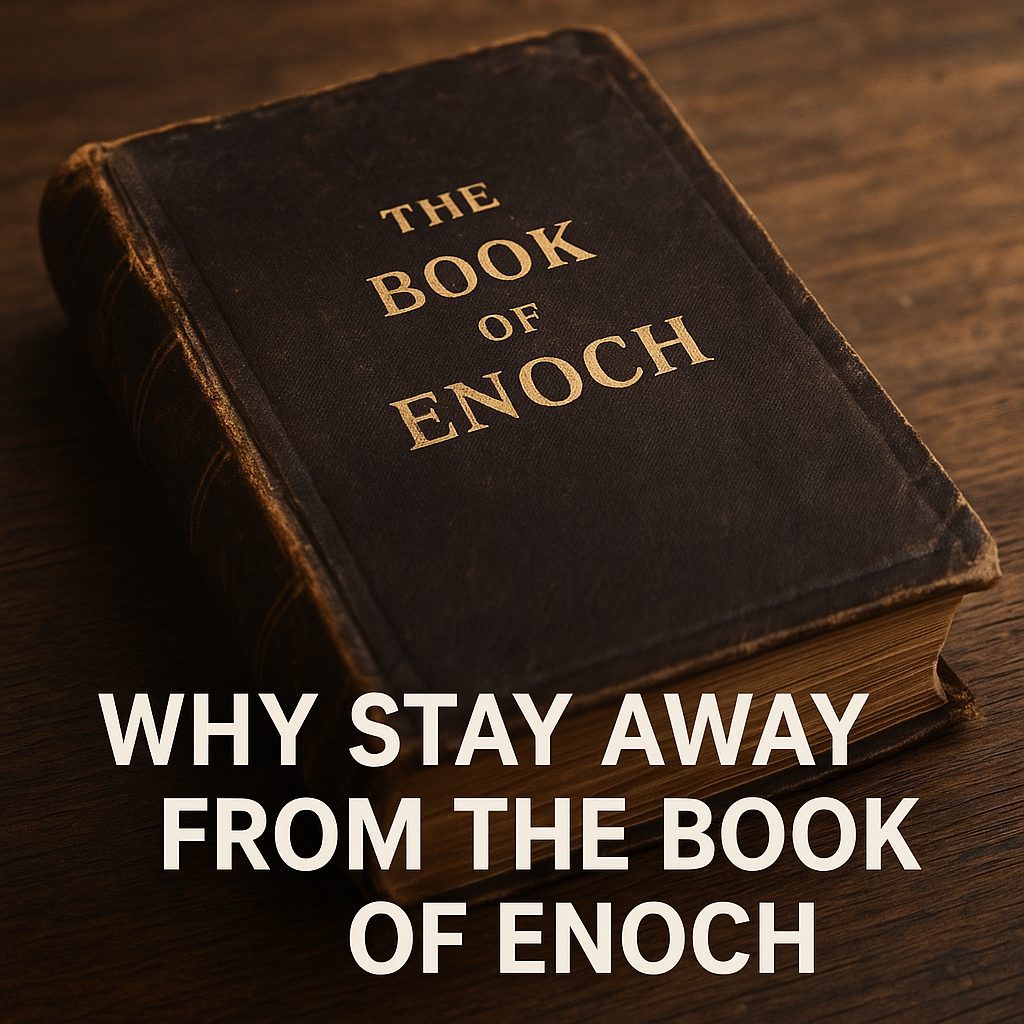
Why Stay Away from the Book of Enoch | A Complete Comprehensive Guide
The Book of Enoch is one of the most mysterious and debated ancient writings ever discovered. Its tales of angels, giants, and heavenly secrets have fascinated readers for centuries. Yet, despite its allure, there are powerful reasons why spiritual leaders and biblical scholars urge believers to stay away from the Book of Enoch.
This article will uncover the truth behind its mystery, explore expert insights, and show you why walking in the light of established truth brings peace, clarity, and spiritual safety.
The Mysterious Origins of the Book of Enoch
The Book of Enoch, also known as 1 Enoch, is an ancient Jewish text believed to date back to between 300 BCE and 100 BCE. It claims to contain divine revelations given to Enoch, the great-grandfather of Noah — the man who “walked with God” and was taken up to heaven (Genesis 5:24).
On the surface, that sounds fascinating. But experts in biblical studies, archaeology, and theology agree that this book was not written by Enoch himself. Instead, it was written thousands of years later by unknown authors.
Modern scholars classify it as pseudepigrapha, meaning “falsely attributed.” This means someone wrote it under Enoch’s name to give it spiritual authority. Because of that, the Book of Enoch was never accepted into the official Bible canon by either the Jewish or Christian communities.
Why It’s Not in the Bible
One of the biggest questions people ask is: If the Book of Enoch is so ancient and spiritual, why isn’t it in the Bible?
The answer lies in a careful process of spiritual discernment and historical reliability. Early religious leaders examined texts based on three main criteria:
-
Apostolic origin – Was it connected to an inspired prophet or apostle?
-
Orthodox teaching – Did it align with the truth of Scripture?
-
Widespread acceptance – Was it recognized by the faithful across generations?
The Book of Enoch failed these tests. It contains strange teachings about fallen angels, celestial secrets, and divine punishment that clash with biblical truth.
While parts of Enoch might be quoted in Jude 1:14–15, scholars clarify that a reference doesn’t equal endorsement. Jude’s use of a line from Enoch doesn’t make the entire book inspired — much like quoting a poem doesn’t make the poem divine.
The Danger of False Revelation
Many people today are drawn to hidden knowledge. The Book of Enoch seems like a treasure chest of secrets — but that’s what makes it dangerous.
Experts in theology warn that texts like this blur the line between truth and myth. They mix spiritual imagery with human imagination, creating confusion instead of clarity.
When people read the Book of Enoch as truth, they risk:
-
Building beliefs on false foundations
-
Misunderstanding God’s true nature
-
Being led into fear, fascination, or spiritual distraction
Faith grows best in the light of God’s Word — not in the shadow of secret writings.
The Spiritual Confusion It Creates
Reading the Book of Enoch can stir curiosity but also confusion. It describes angels teaching humans forbidden arts like magic, astrology, and weapon-making. It even tells of giant offspring called Nephilim — beings said to rule the earth with violence before the Flood.
While these stories are dramatic, experts say they distort biblical messages. The Bible’s focus is on redemption, love, and truth — not on sensational stories.
Religious scholars emphasize that fascination with hidden writings often leads people away from God’s simplicity and peace. Instead of growing in faith, readers get lost in speculation and mystical theories.
Read More: Timewarp TaskUs
Why Scholars and Theologians Reject It
Throughout history, great thinkers like Saint Jerome, Athanasius, and Origen examined the Book of Enoch carefully. They concluded that it did not belong in Scripture.
Even though early Christian writers like Tertullian referenced it, the majority of church fathers rejected it as non-inspired. Today, biblical historians and theologians agree: the Book of Enoch may have historical interest, but it lacks divine authority.
Modern translations of the Bible are built on thousands of verified manuscripts. Enoch’s writings don’t meet that standard — they exist mostly in Ethiopian Ge’ez texts and fragmented Dead Sea Scrolls, with major gaps and inconsistencies.
The Psychological and Emotional Impact
Another reason to stay away from the Book of Enoch is its emotional tone. Unlike the Bible, which gives hope, peace, and comfort, Enoch’s writings are dark, fearful, and apocalyptic.
Readers often report feeling uneasy or spiritually disturbed after reading it. That’s because it focuses on wrath, destruction, and judgment rather than redemption and grace.
Faith should uplift the heart, not weigh it down with fear. That’s why focusing on Scripture — which centers on love, forgiveness, and purpose — brings lasting peace and joy.
The Hidden Agenda of Sensationalism
In today’s world, the Book of Enoch has been revived by YouTube theories, new-age movements, and conspiracy blogs. Many of these sources present it as “lost truth” or “banned wisdom.”
But genuine scholars warn that these claims are misleading. The Book of Enoch was not “banned” — it was simply not accepted because it failed the test of divine inspiration.
The fascination around it often serves one purpose: to stir excitement, sell books, or gain followers online. True faith doesn’t need secret codes or hidden scrolls. It thrives in openness and truth.
Building Trust in Proven Scripture
The Bible is a collection of divinely inspired books, preserved with care and verified through centuries of study. It gives clear guidance, moral truth, and spiritual freedom.
In contrast, the Book of Enoch promotes mystery over clarity. It encourages curiosity without grounding it in truth.
When you build your faith on established Scripture, you anchor yourself to timeless wisdom. Staying away from the Book of Enoch isn’t fear — it’s spiritual wisdom.
Expert Insights: What Scholars Say
Dr. Michael Heiser, a respected scholar in ancient languages, explains that while Enoch offers insight into Second Temple Jewish thought, it is not Scripture. He warns against using it for theology, noting that “it reflects cultural imagination, not divine revelation.”
Similarly, Dr. Craig Evans of Houston Baptist University points out that the Book of Enoch shaped early Jewish mysticism but was never part of the biblical faith handed down by prophets and apostles.
When experts across time and tradition agree, their voice deserves our trust.
Read More: New Orleans Pelicans vs Memphis Grizzlies Match Player Stats
Spiritual Safety and Peace of Mind
Choosing not to read or follow the Book of Enoch isn’t about ignorance — it’s about protection. Just as you wouldn’t drink from an untested well, you shouldn’t feed your spirit from an unverified source.
The Bible assures us that God’s Word is complete (2 Timothy 3:16–17). You don’t need extra books or hidden secrets to grow in faith. Everything essential for your soul is already given — pure, trustworthy, and eternal.
The Power of Staying Rooted in Truth
When you stand firm in truth, you experience:
-
Spiritual stability – You’re not swayed by false teachings.
-
Inner peace – You trust God’s Word without confusion.
-
Deeper faith – You grow in love, wisdom, and understanding.
Staying away from the Book of Enoch isn’t about rejecting curiosity — it’s about choosing clarity over chaos and truth over confusion.
Conclusion
The Book of Enoch may be fascinating, but fascination doesn’t equal truth. While it holds historical interest, it doesn’t belong among inspired Scripture.
Spiritual experts and theologians across history agree: it was written long after Enoch lived, filled with mythic elements, and rejected for good reason.
If your heart seeks wisdom, peace, and divine truth, look no further than the Bible — the tested and trusted Word of God. Stay away from the Book of Enoch, not out of fear, but out of love for truth and desire for spiritual safety.
FAQs About the Book of Enoch
Why is the Book of Enoch considered dangerous?
Because it mixes myth, imagination, and partial truth. It confuses readers and can pull them away from clear biblical teachings. Experts agree it’s not inspired and should not be treated as Scripture.
Is the Book of Enoch mentioned in the Bible?
Yes, a line from it appears in Jude 1:14–15, but that doesn’t make the entire book divine. The Bible often references cultural works without declaring them sacred.
Did early Christians read the Book of Enoch?
Some did, out of curiosity or study. But the majority of church leaders rejected it as uninspired. By the fourth century, it was removed from the list of sacred writings.
Is it wrong to read the Book of Enoch for knowledge?
Not necessarily, if you treat it as historical fiction or study material. But reading it for spiritual guidance can be harmful because it contains distorted theology and false ideas about God and angels.
Why do some people still believe in it today?
Because mystery attracts attention. Many online teachers use it to appear enlightened. But true faith doesn’t rely on hidden books — it rests on God’s revealed Word, which brings lasting hope and joy.