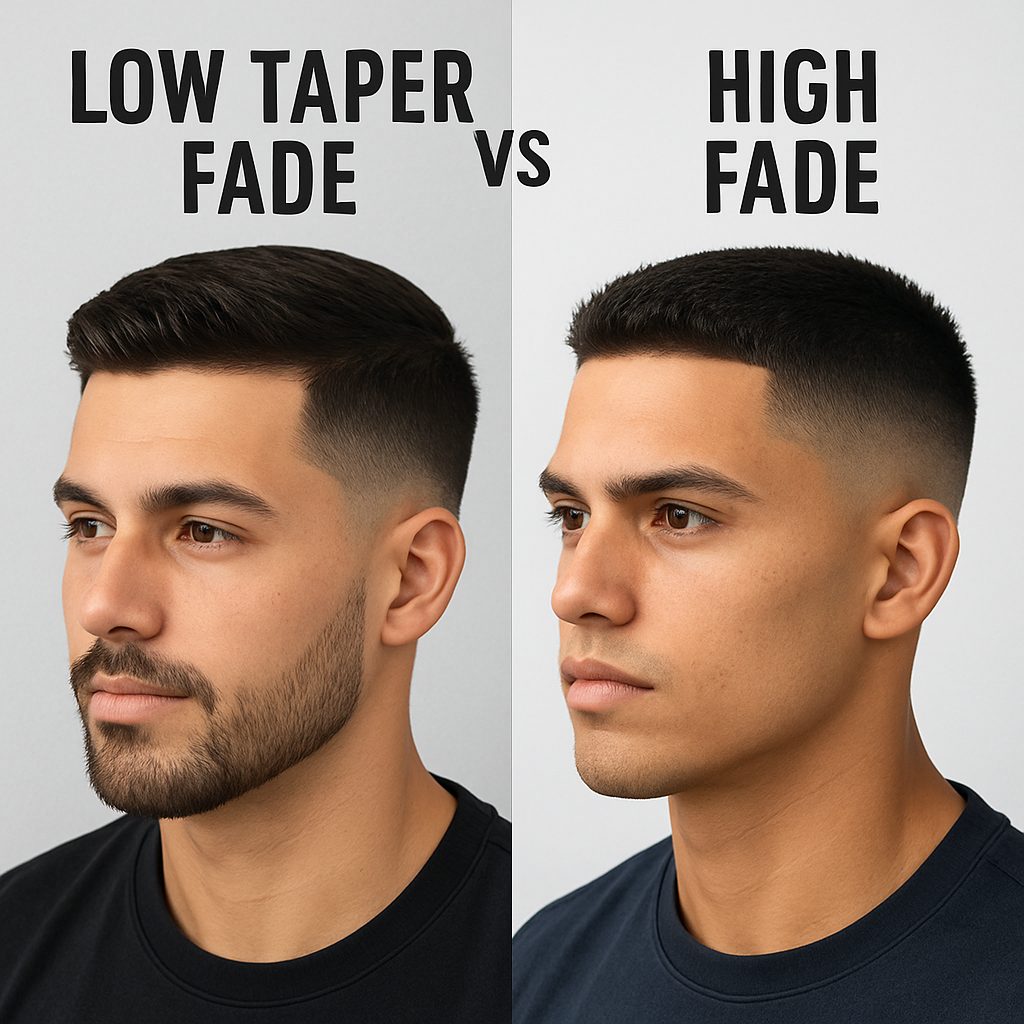
Low Taper Fade vs High Fade: Which One Should You Choose
Introduction
Fade haircuts are one of the most popular men’s hairstyles today, and for good reason. They’re clean, versatile, and can transform a simple haircut into a modern, stylish look. Among the many variations, the low taper fade and the high fade stand out as two of the most requested styles at barbershops worldwide.
But here’s the big question: low taper fade vs high fade—what’s the difference, and which one suits you best? If you’ve ever sat in your barber’s chair confused about which fade to pick, you’re not alone. Let’s break it all down step by step.
Understanding the Basics of Fade Haircuts
What is a fade?
A fade is a gradual transition of hair from short to even shorter as it moves down the sides and back of your head. Instead of having one even length, the hair “fades” into the skin, creating a smooth blend.
The role of tapering in fades
Tapering focuses on shortening the hair gradually around the sideburns and neckline, blending seamlessly into the skin. Combine tapering with a fade, and you get a crisp, polished style.
Low vs high fades at a glance
At a glance, the difference comes down to where the fade starts:
-
A low taper fade begins just above the ears.
-
A high fade starts much higher, often near the temples.
This subtle difference completely changes how the haircut looks and feels.
What is a Low Taper Fade?
Defining the low taper fade
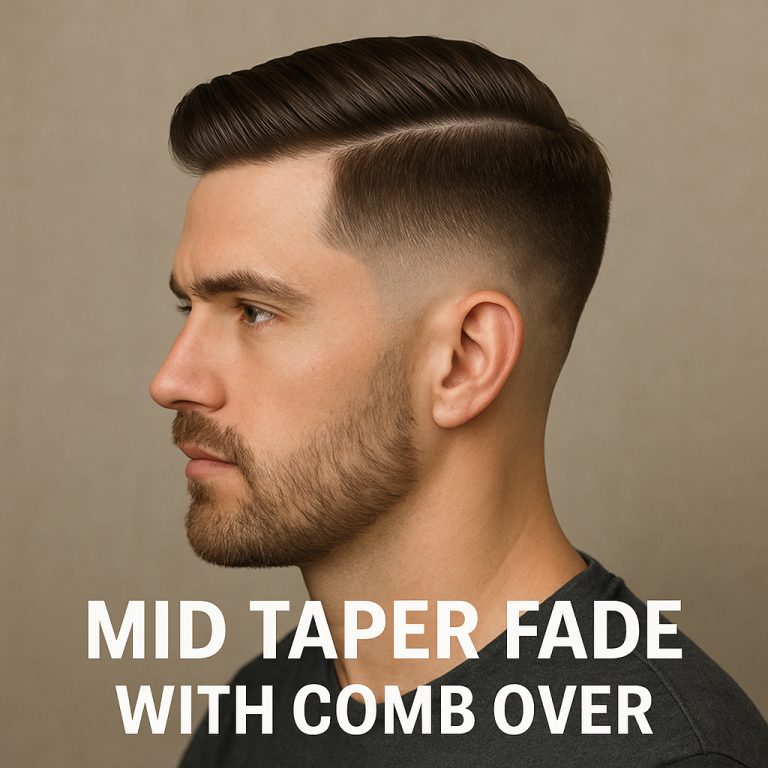
A low taper fade is a clean haircut where the fade begins lower on the head, usually just above the ears. It’s subtle, polished, and less dramatic compared to higher fades.
Key features and style characteristics
-
The fade starts low and blends gradually.
-
Keeps more hair on the sides and back.
-
Offers a neat, professional appearance.
Popular variations of low taper fades
-
Low taper with a side part.
-
Low taper with curly hair.
-
Low taper combined with a line-up for sharp edges.
What is a High Fade?
Defining the high fade
A high fade is bolder. The fade begins much higher on the head, often around the temples or above. It creates a strong contrast between the top and sides.
Key features and style characteristics
-
The fade starts high, making the top stand out.
-
Sides are very short or skin-tight.
-
Adds an edgy, modern vibe.
Popular variations of high fades
-
High fade with a buzz cut.
-
High fade with a pompadour.
-
High fade with textured crops.
Low Taper Fade vs High Fade: The Main Differences
Placement of the fade
-
Low taper fade: fade starts just above the ear.
-
High fade: fade starts near the temples.
Length transition
-
Low taper fades = softer, gradual transitions.
-
High fades = sharp, high-contrast look.
Versatility with different hairstyles
-
Low tapers pair well with professional, neat hairstyles.
-
High fades suit bold, trendy, or military-inspired looks.
Maintenance and upkeep
-
Low tapers last longer between cuts since the fade is subtle.
-
High fades need more frequent touch-ups to maintain sharpness.
Pros and Cons of a Low Taper Fade
Advantages of a low taper fade
-
Professional and office-friendly.
-
Blends well with beards.
-
Works on almost every face shape.
Disadvantages to consider
-
Less dramatic than a high fade.
-
Doesn’t make thin hair look as thick.
Pros and Cons of a High Fade
Advantages of a high fade
-
Creates a bold, striking appearance.
-
Makes hair on top look fuller.
-
Great for modern, trendy styles.
Disadvantages to consider
-
Requires frequent touch-ups.
-
Not always ideal for conservative workplaces.
Which Face Shapes Work Best?
Low taper fade for round, oval, and square faces
A low taper fade softens roundness and enhances balance. It’s especially flattering for oval and square faces since it keeps proportions even.
High fade for long, diamond, and heart-shaped faces
A high fade reduces length and sharpens angles, making it ideal for men with longer or sharper face shapes.
Styling Options for Low Taper Fades
With short hair
Pair a low taper with a buzz or crew cut for a clean, low-maintenance look.
With medium hair
Add volume with a side part, quiff, or messy textured top.
With curly or textured hair
The low taper fade is perfect for controlling the sides while letting curls shine on top.
Styling Options for High Fades
With buzz cuts
Simple, bold, and military-inspired.
With pompadours and quiffs
The high fade emphasizes height and volume, making pompadours pop.
With textured crops
Perfect for modern, edgy looks with strong contrast.
Celebrity Inspirations
Celebrities rocking the low taper fade
-
Zayn Malik with his textured low taper.
-
Drake often pairs his low taper with a sharp beard.
Celebrities with iconic high fades
-
Will Smith’s high fade from his Fresh Prince days.
-
Odell Beckham Jr. with high fade and curls.
How to Ask Your Barber for the Right Fade
Communicating clearly with your barber
Be specific—don’t just say “fade.” Mention whether you want low taper fade or high fade.
Showing references and pictures
Pictures work wonders. Bring a photo of your desired look.
Mentioning length preferences
Tell your barber how much you want to leave on top and how sharp you want the fade to look.
Maintenance Tips for Both Styles
Frequency of barber visits
-
Low taper fades: every 3–4 weeks.
-
High fades: every 2–3 weeks.
At-home grooming tips
-
Use clippers for touch-ups around the neckline.
-
Keep hair moisturized with leave-in conditioner.
Recommended hair products
-
Pomades or wax for sleek looks.
-
Matte pastes for textured styles.
-
Beard oils if you’re pairing with facial hair.
Low Taper Fade vs High Fade: Which One is Right for You?
Based on lifestyle
-
Low taper = professional, low-key.
-
High fade = trendy, outgoing.
Based on personality and fashion sense
If you prefer classic styles, go for the low taper fade. If you love making a statement, the high fade is your match.
Based on hair type
Curly or thick hair? Both styles work. Thin hair? High fade adds more volume and contrast.
Conclusion
So, low taper fade vs high fade—it all boils down to personal preference, lifestyle, and face shape. The low taper fade is subtle, versatile, and professional, while the high fade is bold, sharp, and trendy. Both styles have their place in modern men’s grooming, and the best part is—you can always switch it up!
Whichever fade you choose, make sure to maintain it regularly, use the right products, and most importantly, wear it with confidence.
FAQs About Low Taper Fade vs High Fade
Is a low taper fade more professional than a high fade?
Yes, the low taper fade is more subtle and is often considered workplace-friendly compared to the bold high fade.
How often should I get my fade touched up?
For low tapers, every 3–4 weeks works. High fades need touch-ups every 2–3 weeks.
Can I combine a low taper fade with a beard?
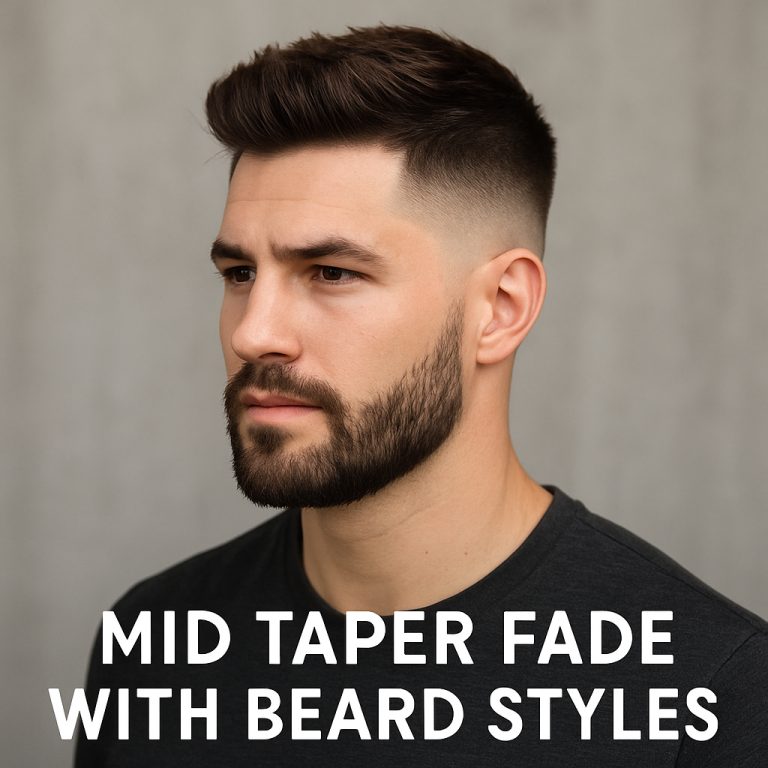
Absolutely! The low taper fade blends seamlessly with beards, giving a clean yet rugged look.
Which fade looks better with curly hair?
Both work, but the low taper fade allows more natural curls to shine, while a high fade gives a sharper, edgier look.
Does a high fade make your head look smaller?
Yes, since the sides are cut very short, a high fade can make your head appear slimmer and more defined.